Subject guides · · 7 min read
How to Study Anatomy
Anatomy buries students in volume. Here's how to learn it with blank diagrams, blurting, mnemonics that stick, and a spaced review plan that lasts all semester.
By StudyDone Team
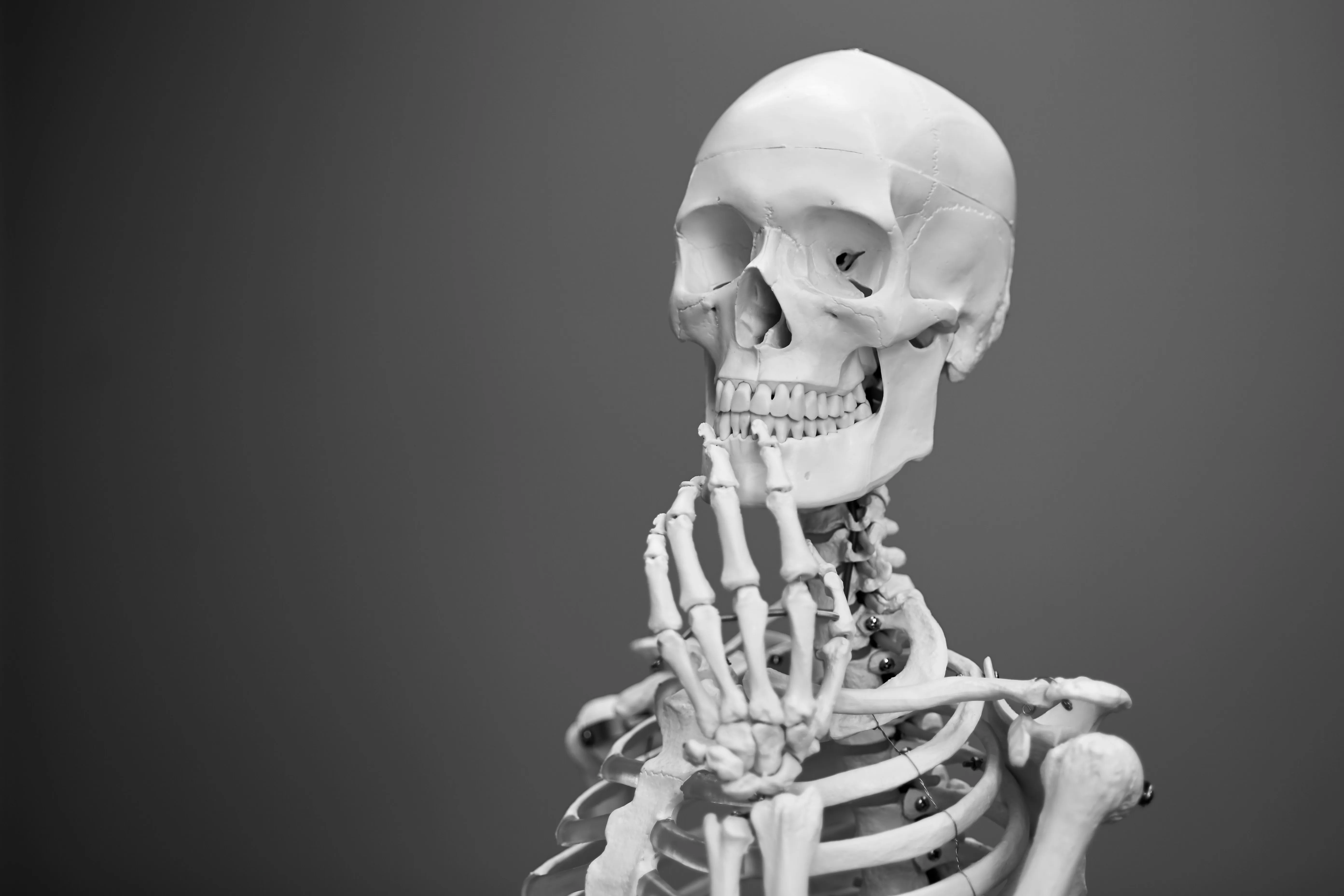
Anatomy has a reputation for being hard, but that’s not quite right. Almost nothing in a first anatomy course is conceptually difficult. The femoral nerve runs where it runs. The problem is volume: a single semester of gross anatomy can cover several thousand named structures, and each one comes with attachments, innervation, blood supply, and relations to its neighbors. The brachial plexus alone, with its roots, trunks, divisions, cords, and terminal branches, can swallow an entire study session.
That volume is exactly why passive studying fails here. Reading the atlas feels like learning because everything looks familiar on the page. Then the practical exam puts a pin in a muscle you’ve “seen” twenty times and your mind goes blank. The fix is active recall: forcing yourself to produce names, attachments, and relationships from memory, over and over, before the exam does it for you.
This guide covers how to organize the material, how to drill it, which mnemonics are worth keeping, and how to schedule reviews so week-3 material is still there in week 14.
Pick an organizing frame: regional or systemic
There are two ways to slice the body. Regional anatomy takes one area at a time, say the posterior forearm, and learns every structure in it: muscles, nerves, arteries, bones, fascia. Systemic anatomy follows one system, like the arterial tree or the cranial nerves, across the whole body.
Most dissection-based courses teach regionally, because that’s how a cadaver works. If yours does, study regionally first. Learn the cubital fossa as a unit: its borders (pronator teres, brachioradialis, a line between the epicondyles) and its contents from lateral to medial. Learning structures in their spatial context is what lab practicals reward.
Then, before each exam, do a systemic sweep as a second pass. Trace the brachial artery from the axillary artery down to its split into radial and ulnar. Follow the median nerve from the lateral and medial cords through the carpal tunnel. This cross-cutting pass catches the relationships a purely regional approach misses, and those relationships are where written-exam questions live.
If your course is systemic (common in nursing and allied health programs), reverse the order: systems first, then a regional pass using diagrams of areas like the femoral triangle or the popliteal fossa to tie systems together.
Make blank diagrams your main weapon
The single highest-yield anatomy exercise is labeling a blank diagram from memory. Take an unlabeled image of the brachial plexus, the branches of the external carotid, or the rotator cuff, and fill in every name you can without looking. Then check, mark what you missed, and redo the same diagram two days later.
This works because it mirrors the test. A practical exam is, functionally, a blank diagram made of actual tissue. Research on retrieval practice (Roediger & Karpicke 2006) shows that testing yourself produces far more durable memory than restudying, and Dunlosky et al. (2013) rated practice testing among the most effective techniques across subjects. Anatomy is the textbook case.
A close cousin is blurting: take a blank sheet, write “muscles of mastication” or “branches of the facial nerve” at the top, and dump everything you know, then compare against your notes and fill the gaps in another color. The blurting method is especially good for list-heavy topics like the carpal bones or the layers of the abdominal wall, where the failure mode is leaving one item out.
Three rules make these drills work:
- Always produce before you peek. Even a wrong guess strengthens the eventual correct memory more than passive review does.
- Drill in both directions. Name the structure from the image, and describe the location from the name. Practicals test the first; written exams test the second.
- Repeat the same diagram on a delay. Getting it right once tonight means little. Getting it right cold on Thursday means it’s stored.
Mnemonics that stick versus gimmicks
Anatomy mnemonics are a cottage industry, and most of them are dead weight. A mnemonic earns its place only when it encodes an arbitrary sequence you’d otherwise have to brute-force.
Good ones solve real ordering problems. “Some Lovers Try Positions That They Can’t Handle” gives you the carpal bones in anatomical order, proximal row then distal: scaphoid, lunate, triquetrum, pisiform, trapezium, trapezoid, capitate, hamate. SITS hands you the rotator cuff in order of insertion on the humerus: supraspinatus, infraspinatus, teres minor, subscapularis. “C3, 4, 5 keeps the diaphragm alive” pins phrenic nerve roots to a fact you’ll use clinically forever. The classic cranial nerve sentence earns its keep too, because twelve nerves in fixed order is exactly the kind of arbitrary list memory hates.
Bad mnemonics share a tell: they take longer to decode than the fact is worth, or they encode something you should understand instead. You don’t need a mnemonic for why the recurrent laryngeal nerve loops under the aorta on the left; you need the embryology story once, and it becomes obvious. When a mnemonic substitutes for a relationship you could reason out, skip it. Understanding scales; sentence-collecting doesn’t.
Keep a short personal list, ten to twenty mnemonics, and put each one on a flashcard so the mnemonic itself gets rehearsed. A mnemonic you can’t recall is just one more thing you’ve forgotten.
Lab practical and written exam need different prep
Treating these as one exam is a common mistake. They test different skills.
A lab practical tests recognition under awkward conditions: a structure tagged with a pin, viewed from an angle the atlas never shows, on a specimen where the fascia wasn’t cleaned the way your atlas artist would like. Prep for it by maximizing image variety. Use photos from your own lab if allowed, cadaver photo atlases, and cross-sections, not just idealized illustrations. Go back into the lab outside scheduled hours if your program permits it and quiz with a partner: one person points, the other names the structure, its innervation, and one neighboring structure. Saying “extensor carpi radialis longus, radial nerve, lateral to brevis” out loud while looking at real tissue is the closest rehearsal to the real thing.
A written exam tests relationships and consequences. What happens with a mid-shaft humeral fracture? (Radial nerve injury, wrist drop.) Which artery supplies the head of the femur and why does a femoral neck fracture threaten it? These are flashcard and explain-aloud territory. Build cards that ask “lesion of X causes what deficit?” and practice explaining structures to an empty chair, naming what crosses them, pierces them, and borders them.
Split your time deliberately. If the practical is worth half your grade, half your study hours should involve images and specimens, not text.
A spaced schedule that survives the semester
Anatomy’s cruelest feature is that it’s cumulative even when the syllabus says it isn’t. The thorax exam assumes the upper limb vocabulary, and the cumulative final assumes everything. A structure learned in week 3 and untouched until week 14 is gone, on a timeline the forgetting research has mapped for over a century.
The fix is a rolling review schedule. Learn new material the week it’s taught, then retrieve it again at expanding intervals: roughly the next day, a few days later, the next week, and then every couple of weeks until the final. Each review is short, often under a minute per structure, because you’re maintaining a memory rather than rebuilding one.
Doing this by hand across thousands of structures is its own administrative job, which is why most students who try manual scheduling quit by midterms. This is the kind of bookkeeping software should own: you can photograph your handwritten lab notes or upload lecture PDFs and StudyDone turns them into flashcards, then schedules each card’s reviews against your exam date so the daily queue stays manageable. If your course distributes slide decks or dissection guides, a PDF to flashcards converter gets the deck built in minutes instead of evenings, leaving your study time for actual retrieval. Either way, learn to write cards that test one structure or one relationship each, because bloated cards are the main reason anatomy decks die.
A realistic weekly rhythm looks like this: 20 to 30 minutes of card review daily, one blank-diagram session midweek for the current region, and one lab or image session before the weekend. That’s well under an hour a day, and it beats the alternative, which is meeting the entire semester again during finals week as a stranger.
When the exam is close
If you’re inside the final two weeks, triage. List every region or system on the exam, rate each as solid, shaky, or absent, and spend your time on shaky first; absent topics get one focused encoding pass, then immediate retrieval drills. Prioritize high-yield convergence points where many exam questions cluster: the brachial plexus, the femoral triangle, the cranial nerves and their foramina, the rotator cuff, the inguinal canal. Keep daily card reviews running even during heavy diagram days, because two weeks is long enough for fresh material to decay. And the night before the practical, walk the regions mentally from superficial to deep, naming as you go. If a region narrates smoothly, it will recognize smoothly under the pins.
FAQ
Is it better to study anatomy regionally or by body system?
Match your course. Most cadaver-based courses teach regionally (upper limb, thorax, abdomen), so study that way first, then do a systemic pass before exams to connect structures across regions. Studying against your course's organization makes lab practicals harder than they need to be.
How many times do I need to review a structure before it sticks?
There's no fixed number, but a single pass is never enough. Plan on retrieving each structure from memory at least four or five times at expanding intervals, with the last review close to the exam. Structures you keep missing need more cycles, not longer staring sessions.
Do anatomy coloring books actually help?
They help with initial encoding because coloring forces you to look at boundaries and relationships carefully. They don't test retrieval, though, so pair them with blank-diagram labeling or flashcards. Coloring alone feels productive while leaving recall weak.
How is studying for a lab practical different from a written exam?
Practicals test recognition of real structures from any angle, often on tagged specimens, so you need exposure to many images and ideally the lab itself. Written exams test relationships, functions, and clinical correlations, which respond better to flashcards and explain-it-aloud practice.
When should I start studying for an anatomy exam?
Start the week material is taught and review it continuously. Anatomy punishes cramming harder than almost any subject because the volume is too large to encode in a few days. Three weeks of short daily reviews beats one brutal weekend every time.