Memory science · · 6 min read
Pomodoro Technique for Studying
The 25/5 Pomodoro method helps you start when you can't and stop before you burn out. When it works, when it backfires, and what to put inside the timer.
By StudyDone Team
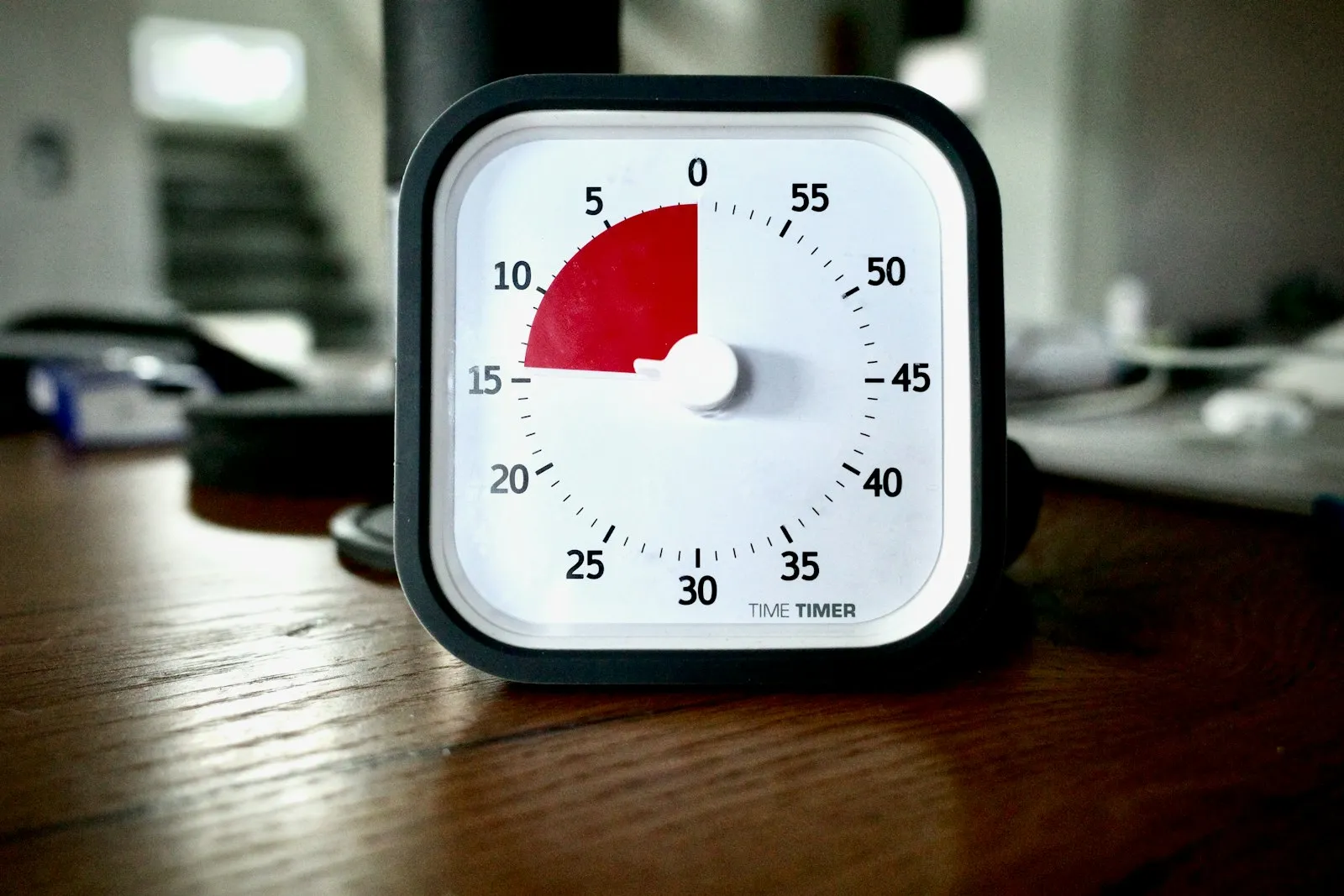
The Pomodoro technique has the best origin story in productivity: a struggling university student, Francesco Cirillo, grabs a tomato-shaped kitchen timer in the late 1980s and bargains with himself for just ten minutes of real focus. The bargain works. He refines it into a system: 25 minutes of single-task work, a 5-minute break, repeat, with a longer break after four rounds. Each block is one “pomodoro,” Italian for tomato.
Forty years later it is the most recommended study technique on the internet, which is exactly why it deserves a skeptical look. The Pomodoro technique manages time. It says nothing about what happens inside those 25 minutes, and the research is blunt that the what dominates the when: an hour of self-testing on a spaced schedule produces more durable learning than an afternoon of beautifully time-boxed re-reading. (The case for that claim lives in our guide to spaced repetition.)
So this is an honest review: how the method works, where it genuinely shines, where it actively hurts, and how to fill the blocks with work that pays.
The classic protocol
The original system is stricter than the watered-down version most people run:
- Pick one task and write it down.
- Set a timer for 25 minutes and work on only that task.
- If a distraction surfaces, jot it on paper and return to the task. The pomodoro is indivisible: a real interruption voids it, and you start a fresh one.
- When the timer rings, stop, even mid-sentence, and take a 5-minute break away from the desk.
- After four pomodoros, take a longer break, 15 to 30 minutes.
Two details carry most of the value and are most often dropped. The distraction list converts “I should check my email” from an action into a note, which quiets the itch without obeying it. And the full-stop break is what keeps block number seven as sharp as block number one; students who skip breaks because they’re “on a roll” tend to buy one good extra block at the price of a wrecked evening.
When pomodoros genuinely help
Starting when you don’t want to. This is the method’s killer feature. Procrastination usually isn’t laziness; it’s the size of the task. “Study for the microbiology midterm” is unstartable. “One pomodoro on lecture 4” is trivially startable, and starting is most of the war. The 25-minute commitment is small enough that your brain doesn’t mount a defense.
Low-energy days. When you’re tired or anxious, an open-ended session collapses into phone-checking within minutes. The timer externalizes discipline: you only owe focus until the bell. Most students find they can be honest for 25 minutes even on days they couldn’t be honest for three hours.
Boring-but-necessary volume work. Flashcard backlogs, formula drills, vocabulary, citation formatting. Work with no intrinsic pull benefits most from external structure.
Measuring real work. “I studied six hours” usually means six hours at a desk. “I did nine pomodoros” is a count of actual attention, and tracking it for a week is a useful, slightly humbling audit. It pairs naturally with the planning questions in how many hours should I study a day.
There’s also a quiet learning benefit hiding in the structure: stopping and returning means you re-engage with material after short gaps, a mild echo of the distributed practice effect documented by Cepeda et al. (2006). Mild. Don’t let anyone sell the timer as a memory technique.
When pomodoros hurt
Here’s the part the productivity blogs soften.
Flow states. Some work, essay drafting, coding, a long proof, has a warm-up cost of ten or twenty minutes before you’re fully inside the problem. A timer that rings 25 minutes in doesn’t pause that state; it kills it, and you pay the warm-up cost again after the break. If you regularly hit the bell annoyed and mid-thought, the protocol is taxing exactly the focus it’s supposed to protect.
Problem sets with long horizons. A hard organic chemistry mechanism or a multi-part statistics problem can take 40 minutes of sustained context-holding. Breaking at minute 25 means dropping a mental stack you then have to rebuild. For this work, the natural boundary is the problem, not the clock.
Timer anxiety. A minority of students find the countdown itself stressful, studying against a ticking clock turns every block into a tiny exam. If that’s you, flip the tool: count up instead, noting how long focus lasted, with no alarm.
Group work and labs. Anything involving other people’s rhythms, partner problem sessions, lab procedures with fixed waiting steps, fits the timer poorly. Don’t force it; the technique was designed for solo desk work and that is where it belongs.
The fix for the first two isn’t abandoning the method; it’s resizing it. The 50/10 variant (fifty on, ten off) suits reading and problem sets. Some deep workers run 90-minute blocks with 20-minute breaks. And a useful hybrid: use the 25-minute timer only as an ignition, then, if flow shows up, silence the bell and ride it, returning to strict pomodoros when it fades. Cirillo’s tomato is a tool, not a covenant.
What to put inside the blocks
This is where the technique either compounds or wastes its discipline. Time-boxed re-reading is still re-reading, which Dunlosky et al. (2013) rated among the least effective things a student can do. The same review put practice testing at the top, so the highest-yield pomodoro is a retrieval pomodoro.
A strong four-block session for one course looks like this:
| Block | Contents |
|---|---|
| 1 | Due reviews: flashcards or questions from previous lectures, answered from memory |
| 2 | New material: one careful read of today’s notes, converting them into questions as you go |
| 3 | Blurting: blank-page recall of blocks 1–2, then check against notes |
| 4 | Practice questions on this week’s weakest topic, closed book |
Notice the ratio: three of four blocks are retrieval. The 5-minute breaks fit this rhythm well, since stepping away after a recall block gives the corrections a moment to settle.
The table is a template, not a law. A language learner might run vocabulary retrieval, listening practice, blurted grammar rules, then a timed writing prompt. A nursing student might do due flashcards, one practice case worked aloud, a blurt of today’s lecture, then NCLEX-style questions. The constant is the shape: most blocks closed-book, every block producing answers rather than consuming pages.
Two practical upgrades. First, decide each block’s task before the timer starts; “block 3: blurt lecture 7” on a sticky note prevents the first five minutes dissolving into deciding. Second, keep a no-setup retrieval task ready for low-energy blocks. Self-testing is the obvious filler, and if your course has no question bank, you can turn your own notes into practice quizzes once and have block-sized material on tap for the rest of the term.
If you want the schedule side handled too, this is the gap StudyDone fills: it builds the questions from your notes and queues exactly what’s due each day, paced to your exam date, so a pomodoro can begin with zero decisions, just the timer and the first question.
Putting it into practice
Run a one-week experiment. Days one to three: strict classic protocol, 25/5, distraction list, hard stops, and log every completed block. Days four and five: switch to 50/10 for reading and problem work, keeping 25/5 for drills. Days six and seven: keep whichever fit better, with one rule held constant throughout, that at least half your blocks are retrieval, not review.
At the end of the week you’ll know three things most students never learn: how much focused work you actually do in a day, which block length suits which subject, and whether the timer is serving you or interrupting you. Keep the tomato if it earns its place. It usually does, but only as the container. The learning comes from what you pour in.
FAQ
What is the Pomodoro technique?
A time-management method developed by Francesco Cirillo in the late 1980s: work in focused 25-minute blocks separated by 5-minute breaks, with a longer break after four blocks. The name comes from the tomato-shaped kitchen timer Cirillo used as a student.
Is 25 minutes really the optimal study interval?
No, and Cirillo never claimed it was magic. 25 minutes is a starting point that feels achievable when motivation is low. Many students settle into 50/10 blocks for reading and problem sets, and some deep work, like writing or hard derivations, goes better with no timer at all.
What should I do during Pomodoro breaks?
Get away from the desk and the screen: stretch, walk, refill water, stare out a window. Avoid social media, because five minutes of feeds reliably becomes twenty and leaves your attention scattered. The break's job is to let your mind idle, which also helps fresh material settle.
How many pomodoros should a study day have?
For most students, eight to twelve genuinely focused blocks, four to six hours of real work, is a strong day. Counting pomodoros is more useful than counting hours at a desk, because it measures attention rather than attendance.
Does the Pomodoro technique actually improve grades?
On its own, no. It is a container for attention, not a learning method, and the research-backed gains come from what you do inside the blocks. Pomodoros filled with self-testing and spaced review beat pomodoros filled with re-reading by a wide margin.